English
 Español
In the modern textile industry, 100% polyester fabric, with its excellent performance, stable physical properties, and diverse applications, has become the preferred fabric in various fields, including clothing, home textiles, and industrial applications. Polyester fabric is derived from polyester fibers, and its molecular structure determines its unique durability and adaptability, allowing it to remain competitive among numerous synthetic fibers.
Structural Advantages of Polyester Fibers
100% polyester fabric is made from polyethylene terephthalate (PET), with regularly and tightly arranged fiber chains, giving the fabric good strength and toughness. Because of this, polyester fabric is less prone to deformation, wrinkling, or shrinkage during long-term use, maintaining the original shape of clothing or home textile products. At the same time, the non-polar nature of its molecular chains gives the fabric a certain degree of water and oil resistance, which is an important reason for its widespread use in outdoor sportswear and protective equipment.
The uniformity and continuity of the polyester fiber structure give the fabric excellent dyeing stability. During the dyeing process, polyester fibers can evenly absorb dyes, resulting in bright and long-lasting colors that are not prone to fading. This characteristic is particularly valued in high-end clothing and home textile decorations, as color stability directly affects the visual quality and lifespan of the product.
Functional Characteristics of 100% Polyester Fabric
Abrasion resistance is a major highlight of 100% polyester fabric. The smooth surface of polyester fibers and the low friction coefficient between molecular chains make it less prone to pilling or damage under prolonged friction, which is especially important when making frequently worn clothing and home fabrics. At the same time, polyester fabric has excellent tensile strength, recovering quickly even after strong stretching, making it widely used in sportswear and functional fabrics.
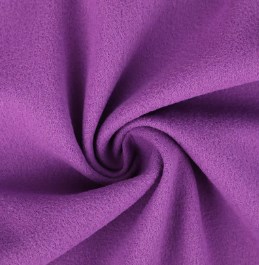
Although its breathability and moisture absorption are relatively lower than natural fibers, modern technology, through special fiber treatment and fabric design, can significantly improve its comfort. Polyester fabric can adjust the fiber porosity through spinning processes to achieve a balance between air circulation and sweat wicking, thus meeting the wearing needs of different seasons and scenarios. Its low moisture absorption rate also makes the fabric dry quickly, facilitating daily cleaning and maintenance, and improving the practicality and convenience of the fabric.
Technological Innovations in 100% Polyester Fabric
With the advancement of textile technology, the production process of 100% polyester fabric is constantly evolving. Through the modification and combination of polyester fibers with polymer materials, the fabric can be endowed with functions such as anti-static, UV protection, and antibacterial properties, further broadening its application areas. In the weaving and finishing stages, the fabric can be treated mechanically or chemically to create diverse textures and visual effects, ranging from soft and silky to crisp and structured, meeting the needs of different consumers.
Polyester fabric exhibits excellent heat setting properties. The fabric maintains a stable form at high temperatures, and even after multiple washes, garments made from it are less prone to shrinkage or deformation. This characteristic not only improves the durability of the fabric but also reduces the difficulty of garment maintenance, making it particularly suitable for everyday wear and high-frequency use.
Wide Range of Applications
The applications of 100% polyester fabric cover almost all areas, including clothing, home textiles, industrial applications, and special functional fields. In clothing, it can be used to make everyday wear, sportswear, professional uniforms, and protective clothing, meeting multi-level needs from comfort to functionality. In home textile products, 100% polyester fabric, with its advantages of durability, easy cleaning, and vibrant colors, has become an important choice for bedding, curtains, sofa covers, and decorative fabrics.
Industrial polyester fabrics demonstrate stable mechanical properties and chemical resistance, as seen in applications such as seat belts, filter cloths, tents, and transportation packaging materials, showcasing the fabric's reliability under pressure and environmental changes. This cross-sector adaptability maintains the high competitiveness of 100% polyester fabric in the market.
Environmental Protection and Sustainable Development
The modern textile industry is increasingly demanding environmental protection and sustainable development, and 100% polyester fabric has been optimized in this trend. By recycling PET bottles or waste polyester products, recycled polyester fibers are produced, which not only reduces reliance on petrochemical resources but also reduces the environmental pressure from waste. Advanced dyeing and finishing processes reduce the use of water resources and chemicals, improving production efficiency while reducing environmental pollution, providing a feasible solution for green production.
Maintenance and Care Suggestions
The care of 100% polyester fabric is relatively simple, suitable for modern fast-paced lifestyles. The fabric's washability and wrinkle resistance mean it doesn't require frequent ironing, and it can withstand low-temperature machine washing and gentle drying. For long-term storage, avoid direct sunlight and high temperatures to prevent slight color fading or fiber aging. Appropriate anti-static treatment can also extend the fabric's lifespan and keep the garment surface clean and smooth.
FAQ
Q: Is 100% Polyester Fabric suitable for sensitive skin?
A: 100% polyester fabric has a smooth surface and, after modern textile processing, usually does not irritate the skin. However, for extremely sensitive individuals, choosing a fabric with a softening finish will be more comfortable.
Q: Is polyester fabric easy to dye?
A: Due to the chemical structure of polyester fibers, dyeing requires high temperature and high pressure conditions. Modern processes can achieve uniform and long-lasting colors that are resistant to fading.
Q: Can 100% polyester fabric be waterproofed?
A: Yes. Through surface coating or fiber modification, 100% polyester fabric can be made waterproof while maintaining breathability.
Q: Does polyester fabric easily generate static electricity?
A: Yes, static electricity is easily generated in dry environments. However, anti-static finishing agents or blending methods can reduce static accumulation.
Q: Is 100% polyester fabric environmentally friendly?
A: Polyester fabric made from recycled polyester fibers has environmental advantages, reducing resource consumption and waste, while supporting recycling.